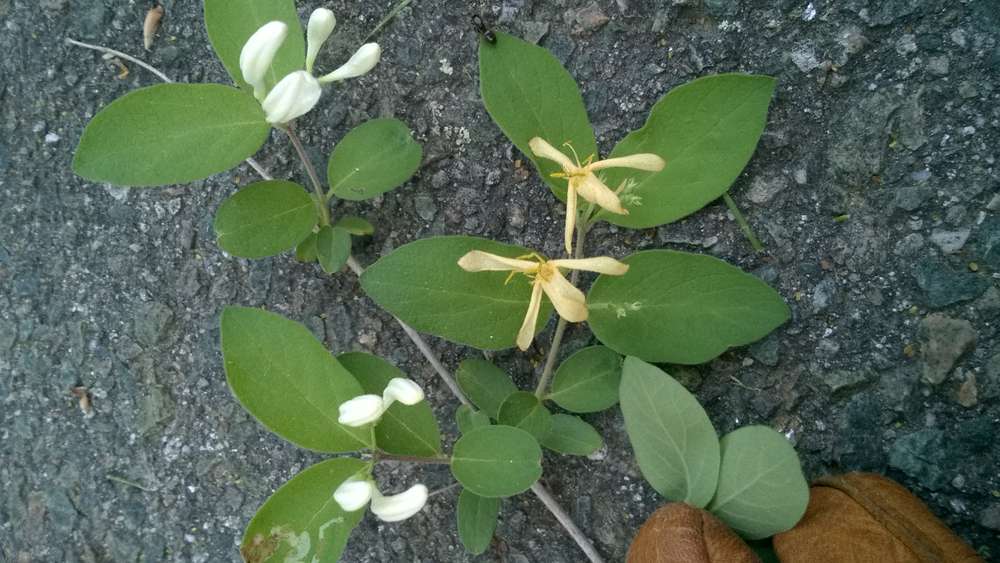
Question: Found in Sudbury, MA along southern edge of primarily coniferous woodline; photo taken on May 18th. Photo shows fresh white …
-
Question
Found in Sudbury, MA along southern edge of primarily coniferous woodline; photo taken on May 18th. Photo shows fresh white and spent yellowed flowers. Bush habit, textured bark, some specimens peeling. Flowers are in pairs and have separate ovaries. Full key seems to indicate this is a honeysuckle (a term that triggers a knee-jerk reaction "Ahhh! Invasive! Kill it!") and I was surprised to learn there are native species! Am I fortunate to have one, or is it pitchfork time?
Answer
Dear Kamereone, good morning. I understand the "kneejerk reaction" you spoke of, but these are really important to avoid. Entire lakes of native aquatic plants have been removed because someone assumed the species in question was non-native and invasive. Also, important to point out the non-native species did not travel to this continent of their own will with an evil agenda, but are the result of global travel for trade, resource extraction, etc. (i.e., all things we have created and continue to foster). That all written, I do understand the drastic modification to natural communities that occur with the invasion of some non-native species. I only mean to suggest that any hatred we have for this situation should be directed to where the blame actually lies (us). Your plant is Lonicera morrowii (Morrow's honeysuckle), a non-native species that was first introduced to MA for horticulture (it is from Asia). It can be very invasive. The native species of honeysuckle have very different flowers (examine web images of Lonicera canadensis and Lonicera villosa for comparison).